<?xml version='1.0' encoding='UTF-8'?>

<!DOCTYPE article PUBLIC "-//NLM//DTD JATS (Z39.96) Journal Publishing DTD v1.1d1 20130915//EN" "JATS-journalpublishing1.dtd">
<article xmlns:xlink="http://www.w3.org/1999/xlink">
  <front>
    <journal-meta id="journal-meta-87cddb9ab7774ac9973b6a64b7cbc767">
      <journal-id journal-id-type="nlm-ta">Sciresol</journal-id>
      <journal-id journal-id-type="publisher-id">Sciresol</journal-id>
      <journal-id journal-id-type="journal_submission_guidelines">https://jmsh.ac.in/</journal-id>
      <journal-title-group>
        <journal-title>Journal of Medical Sciences and Health</journal-title>
      </journal-title-group>
      <issn publication-format="print"/>
    </journal-meta>
    <article-meta>
        
          
            <article-id pub-id-type="doi">10.53989/bu.ge.v15.i1.26.8</article-id>
          
          
            <article-categories>
              <subj-group>
                <subject>ORIGINAL ARTICLE</subject>
              </subj-group>
            </article-categories>
            <title-group>
              <article-title>&lt;p&gt;Comparative Spatial Analysis of Groundwater Quality in Rural and Urban Areas of Ramgarh District, Jharkhand Using Hydrochemical Parameters&lt;/p&gt;</article-title>
            </title-group>
          
          
            <pub-date date-type="pub">
              <day>30</day>
              <month>3</month>
              <year>2026</year>
            </pub-date>
            <permissions>
              <copyright-year>2026</copyright-year>
            </permissions>
          
          
            <volume>15</volume>
          
          
            <issue>1</issue>
          
          <fpage>1</fpage>

          <abstract>
            <title>Abstract</title>
            &lt;p&gt;Groundwater is a crucial source of freshwater for drinking and irrigation, particularly in rural and semi-urban regions of developing countries. Rapid urbanization, population growth, and anthropogenic activities increasingly threaten groundwater quality. This study evaluates the spatial variation of groundwater quality across rural and urban areas of Ramgarh District, Jharkhand, India. A total of 51 groundwater samples were collected from wells, hand pumps, and tube wells across six administrative blocks during the post-monsoon period of December 2025. Key hydrochemical parameters including pH, Total Dissolved Solids (TDS), and Electrical Conductivity (EC) were analysed and compared with World Health Organization (WHO) and Bureau of Indian Standards (BIS) guidelines. The results indicate that pH values in both rural and urban areas remain within permissible limits, suggesting neutral groundwater conditions. However, urban areas exhibit higher TDS and EC values compared to rural areas, indicating greater mineralization and potential anthropogenic influence. The spatial maps produced in this study provide a useful baseline for monitoring groundwater quality and identifying safe and vulnerable zones for future water resource management in the district.&lt;/p&gt;
          </abstract>
          
          
            <kwd-group>
              <title>Keywords</title>
              
                <kwd>Groundwater Quality; Rural–Urban Comparison; Hydrochemical Parameters; Spatial Analysis; Ramgarh District</kwd>
              
            </kwd-group>


        <contrib-group>
          
            
              <contrib contrib-type="author">
                <name>
                  <surname>Mondal</surname>
                  <given-names>Aritra</given-names>
                </name>
                
                  <xref rid="aff-1" ref-type="aff">1</xref>
                
              </contrib>


              <aff id="aff-1">
                <institution> Research Scholar, University Department of Geography Ranchi University </institution>
                <addr-line>Ranchi, Jharkhand India</addr-line>
              </aff>
            
              <aff id="aff-2">
                <institution> Teacher, Department of Geography Hiralal Bhakat College </institution>
                <addr-line>Nalhati, West Bengal India</addr-line>
              </aff>
            
              <aff id="aff-3">
                <institution> Research Scholar, University Dept of Geography Ranchi University </institution>
                <addr-line>Ranchi, Jharkhand India</addr-line>
              </aff>
            
              <aff id="aff-4">
                <institution> Assistant Professor, Department of Geography St. Xaviers College </institution>
                <addr-line>Ranchi, Jharkhand India</addr-line>
              </aff>


              <contrib contrib-type="author">
                <name>
                  <surname>Ghosh</surname>
                  <given-names>Sajal</given-names>
                </name>
                
                  <xref rid="aff-2" ref-type="aff">2</xref>
                
              </contrib>


              <aff id="aff-1">
                <institution> Research Scholar, University Department of Geography Ranchi University </institution>
                <addr-line>Ranchi, Jharkhand India</addr-line>
              </aff>
            
              <aff id="aff-2">
                <institution> Teacher, Department of Geography Hiralal Bhakat College </institution>
                <addr-line>Nalhati, West Bengal India</addr-line>
              </aff>
            
              <aff id="aff-3">
                <institution> Research Scholar, University Dept of Geography Ranchi University </institution>
                <addr-line>Ranchi, Jharkhand India</addr-line>
              </aff>
            
              <aff id="aff-4">
                <institution> Assistant Professor, Department of Geography St. Xaviers College </institution>
                <addr-line>Ranchi, Jharkhand India</addr-line>
              </aff>


              <contrib contrib-type="author">
                <name>
                  <surname>Anwar</surname>
                  <given-names>Md Sayeed</given-names>
                </name>
                
                  <xref rid="aff-3" ref-type="aff">3</xref>
                
              </contrib>


              <aff id="aff-1">
                <institution> Research Scholar, University Department of Geography Ranchi University </institution>
                <addr-line>Ranchi, Jharkhand India</addr-line>
              </aff>
            
              <aff id="aff-2">
                <institution> Teacher, Department of Geography Hiralal Bhakat College </institution>
                <addr-line>Nalhati, West Bengal India</addr-line>
              </aff>
            
              <aff id="aff-3">
                <institution> Research Scholar, University Dept of Geography Ranchi University </institution>
                <addr-line>Ranchi, Jharkhand India</addr-line>
              </aff>
            
              <aff id="aff-4">
                <institution> Assistant Professor, Department of Geography St. Xaviers College </institution>
                <addr-line>Ranchi, Jharkhand India</addr-line>
              </aff>


              <contrib contrib-type="author">
                <name>
                  <surname>Chandra</surname>
                  <given-names>Sandeep</given-names>
                </name>
                
                  <xref rid="aff-4" ref-type="aff">4</xref>
                
              </contrib>


              <aff id="aff-1">
                <institution> Research Scholar, University Department of Geography Ranchi University </institution>
                <addr-line>Ranchi, Jharkhand India</addr-line>
              </aff>
            
              <aff id="aff-2">
                <institution> Teacher, Department of Geography Hiralal Bhakat College </institution>
                <addr-line>Nalhati, West Bengal India</addr-line>
              </aff>
            
              <aff id="aff-3">
                <institution> Research Scholar, University Dept of Geography Ranchi University </institution>
                <addr-line>Ranchi, Jharkhand India</addr-line>
              </aff>
            
              <aff id="aff-4">
                <institution> Assistant Professor, Department of Geography St. Xaviers College </institution>
                <addr-line>Ranchi, Jharkhand India</addr-line>
              </aff>
            
          
        </contrib-group>
        
    </article-meta>
  </front>
  <body>
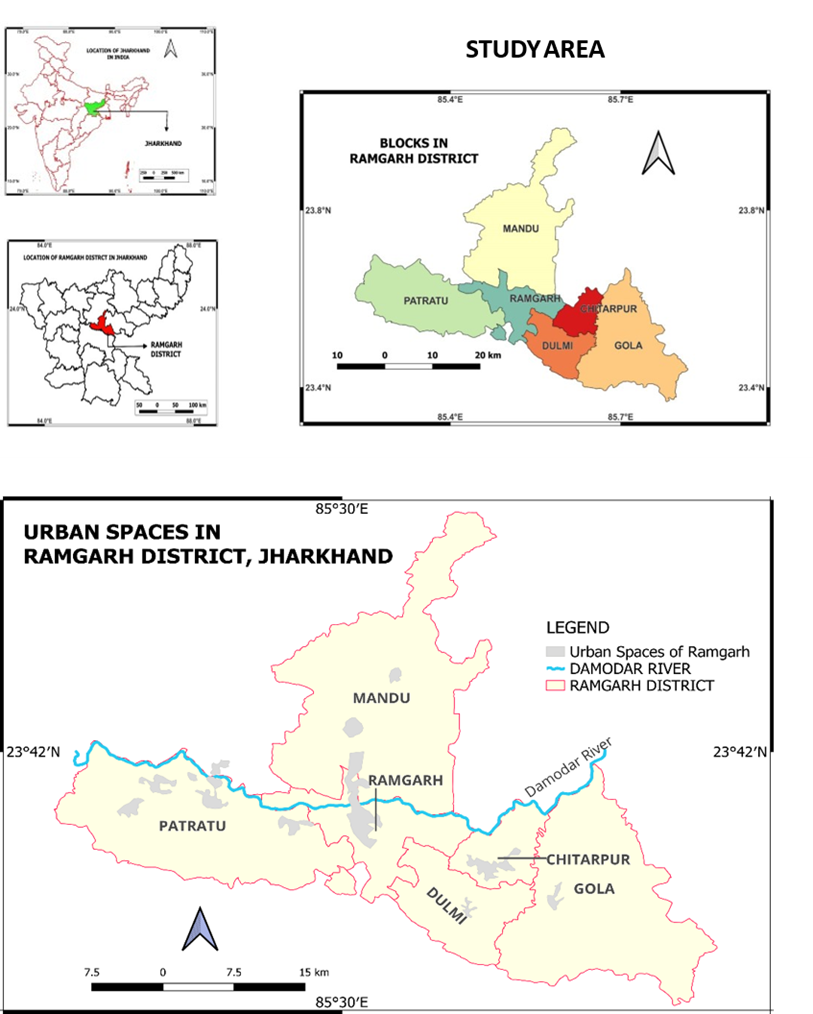
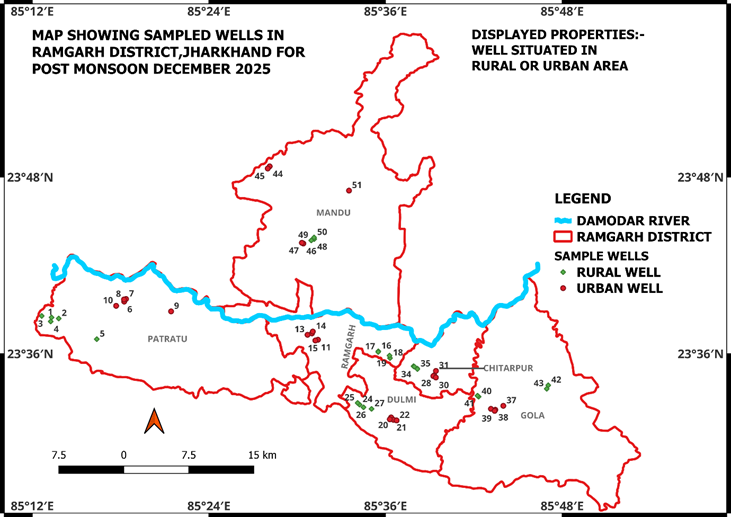
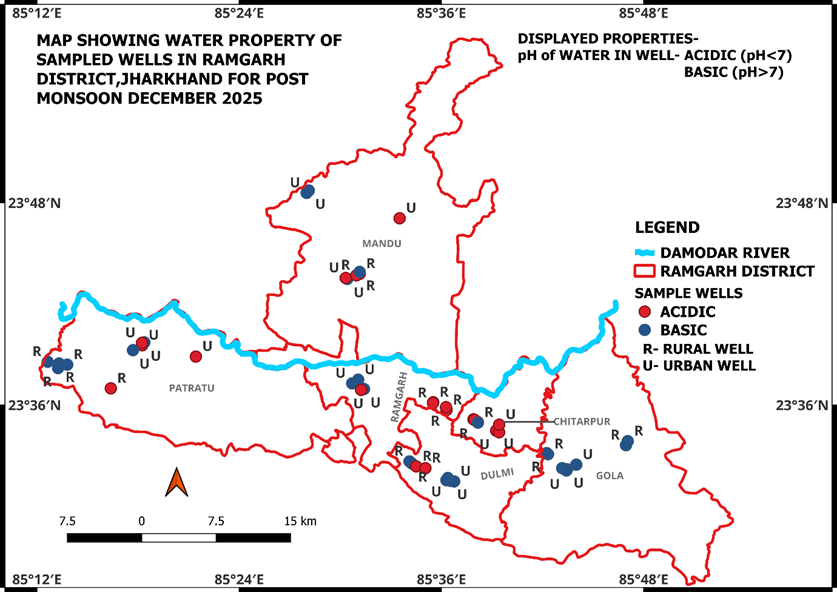
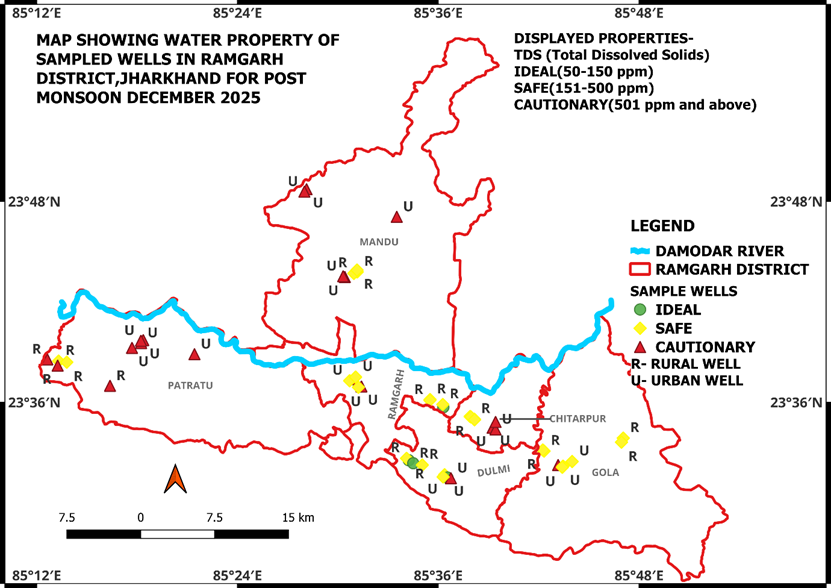
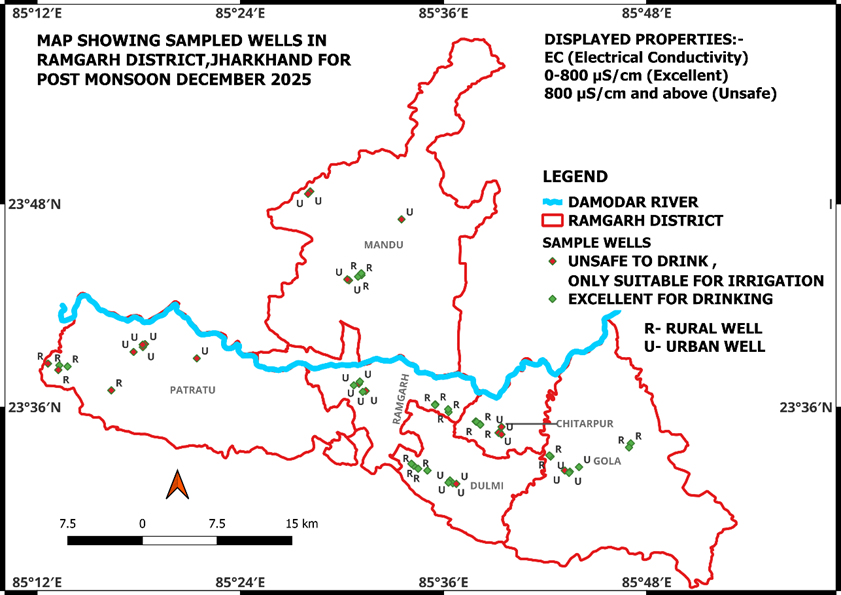
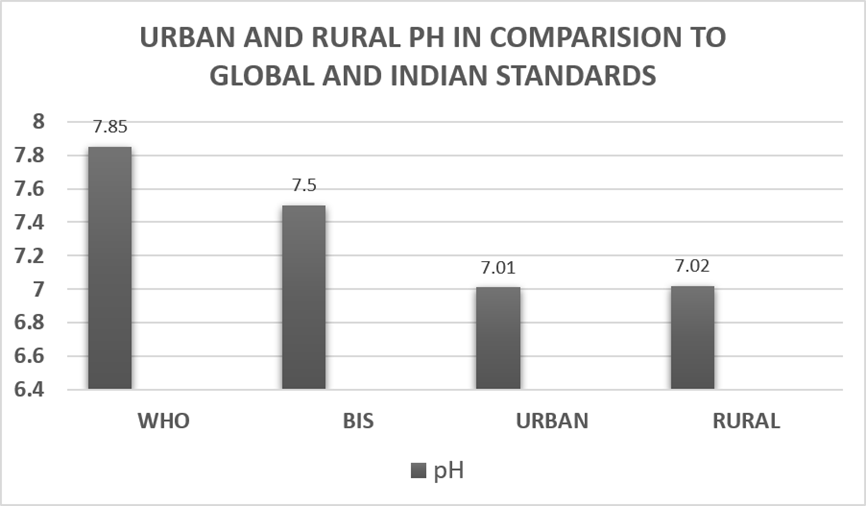
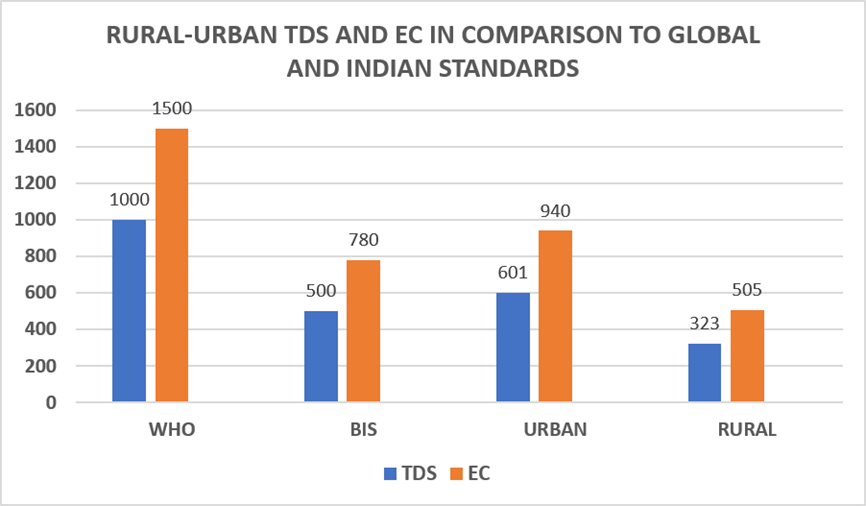
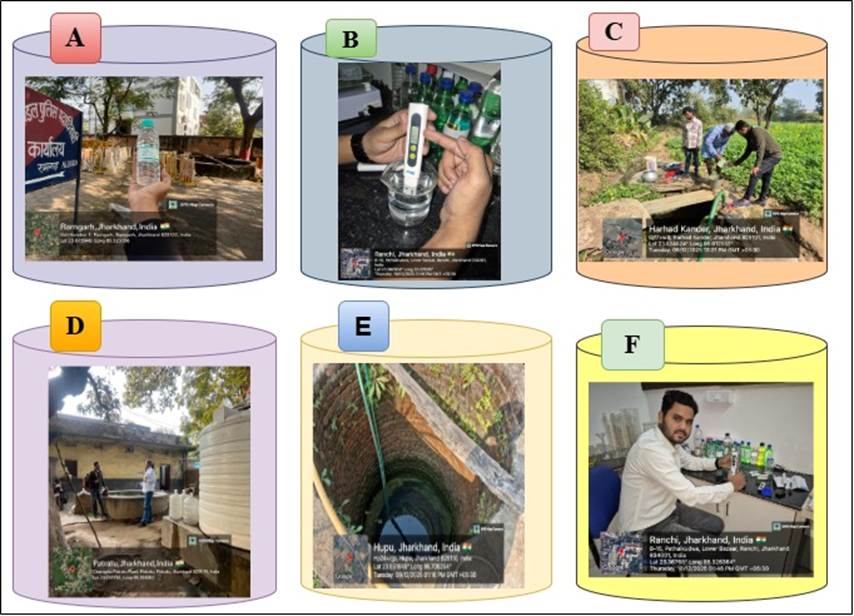
    <heading><span><bold>1 Introduction</bold></span></heading><p><span>The world's greatest freshwater supply for rural and semi-urban people, groundwater is the purest natural water source and serves as a risk buffer during dry spells<superscript>[<xref ref-type="link" rid="#ref-39">39</xref>]</superscript>. In these geographic areas, groundwater is essential for drinking supplies. According to UNESCO (2015), one-third of the world's population now solely relies on groundwater<superscript>[<xref ref-type="link" rid="#ref-61">61</xref>]</superscript>. Groundwater is the water that permeates every void in a geological stratum. Water makes up the majority of the earth's crust, which acts as a reservoir and a conduit for information<superscript>[<xref ref-type="link" rid="#ref-21">21</xref>]</superscript>. As the need for high-quality water in homes, businesses, and agriculture has grown, groundwater is favored because of its wider spread and lesser contamination<superscript>[<xref ref-type="link" rid="#ref-12">12</xref>]</superscript>. Surface water and precipitation provide groundwater with replenishment. The natural replenishment that comes from streams and other natural water sources, the man-made recharge process, and the water that falls on the earth naturally as a result of precipitation are all examples<superscript>[<xref ref-type="link" rid="#ref-2">2</xref>]</superscript>. Due to the severe groundwater scarcity in Indian regions, many research have been conducted to find possible areas. Global models that combine remote sensing technology and GIS are being created<superscript>[<xref ref-type="link" rid="#ref-14">14</xref>]</superscript>. India's 60-65 million inhabitants are consuming contaminated groundwater, causing harm to 3 million people, primarily in Rajasthan, Punjab, Gujarat, Madhya Pradesh, Uttar Pradesh, Jharkhand, Andhra Pradesh, and Tamilnadu<superscript>[<xref ref-type="link" rid="#ref-56">56</xref>]</superscript>. Remote sensing technology effectively collects vast data on groundwater's movement, migration, and recharge, providing micro-level insights into various characteristics<superscript>[<xref ref-type="link" rid="#ref-1">1</xref>]</superscript>. Groundwater potential zone mapping is made easier with RS and GIS, which are dependable, economical, and time-efficient methods for water management and conservation<superscript>[<xref ref-type="link" rid="#ref-13">13</xref>]</superscript>.</span></p><p><span>The greatest freshwater supply in the world, groundwater is the purest natural resource and provides rural and semi-urban communities with a buffer against risk during dry spells<superscript>[<xref ref-type="link" rid="#ref-40">40</xref>]</superscript>. In these geographic areas, groundwater is essential for drinking supplies. Currently, a third of the world's population is solely dependent on groundwater<superscript>[<xref ref-type="link" rid="#ref-61">61</xref>]</superscript>. The earth's crust contains the majority of groundwater, a type of water that permeates all geological layers and serves as a reservoir and a conduit for transmission<superscript>[<xref ref-type="link" rid="#ref-21">21</xref>]</superscript>. As the need for high-quality water in homes, businesses, and agriculture has grown, groundwater is favored because of its wider spread and lesser contamination<superscript>[<xref ref-type="link" rid="#ref-12">12</xref>]</superscript>. Precipitation, surface water from both natural and artificial sources, and man-made recharge mechanisms all contribute to the replenishment of groundwater<superscript>[<xref ref-type="link" rid="#ref-2">2</xref>]</superscript>. Remote sensing data and GIS exploration help with resource evaluation and conservation by addressing groundwater management issues brought on by urbanization, population increase, climate change, and erratic rainfall<superscript>[<xref ref-type="link" rid="#ref-10">10</xref>]</superscript>.</span></p><p><span>As it indicates the salinity hazard to crops, measuring electrical conductivity is an excellent way to evaluate water quality for irrigation<superscript>[<xref ref-type="link" rid="#ref-32">32</xref>, <xref ref-type="link" rid="#ref-53">53</xref>]</superscript>.</span></p><p><span>Groundwater quality differs from place to place and this may therefore affect its suitability for consumption<superscript>[<xref ref-type="link" rid="#ref-60">60</xref>]</superscript>, For example, land-use has been found to affect the quality of groundwater<superscript>[<xref ref-type="link" rid="#ref-44">44</xref>, <xref ref-type="link" rid="#ref-60">60</xref>]</superscript>. Polluted groundwater resource may initiate water-borne diseases such as gastroenteritis, cholera, typhoid fever and giardiasis<superscript>[<xref ref-type="link" rid="#ref-60">60</xref>]</superscript>.</span></p><p><span>Flow and transport processes affecting urban groundwater are not essentially different from those affecting groundwater in rural contexts, but the time and space scales involved are significantly different<superscript>[<xref ref-type="link" rid="#ref-29">29</xref>]</superscript>.</span></p><p><span>Urban groundwater systems are under increasing stress from rapid, unplanned urbanization, with contamination arising from industrial effluents, poor sanitation, agricultural runoff, and improper waste disposal<superscript>[<xref ref-type="link" rid="#ref-57">57</xref>]</superscript>. Rapid, often unplanned urbanization has led to significant groundwater degradation driven by industrial discharges, leachate from urban solid waste dumps, and infiltration of domestic wastewater<superscript>[<xref ref-type="link" rid="#ref-38">38</xref>, <xref ref-type="link" rid="#ref-57">57</xref>]</superscript>. Urbanization is a human-induced process that changes land use and land cover (LULC), as well as the amount and quality of surface and groundwater resources, particularly in urban and peri-urban areas<superscript>[<xref ref-type="link" rid="#ref-31">31</xref>, <xref ref-type="link" rid="#ref-35">35</xref>, <xref ref-type="link" rid="#ref-43">43</xref>]</superscript>. The uneven distribution of water across time (temporal) and space (spatial) as well as the increased consumption and usage along with the problems of pollution, contamination, misuse and wastage; have given rise to water crisis in different parts of the world<superscript>[<xref ref-type="link" rid="#ref-15">15</xref>]</superscript>. Surface waters are the best sinks for several point and non-point sources of pollution such as wastewater from agricultural and industrial processes, storm runoff amongst others<superscript>[<xref ref-type="link" rid="#ref-16">16</xref>, <xref ref-type="link" rid="#ref-42">42</xref>, <xref ref-type="link" rid="#ref-45">45</xref>]</superscript>. The assessment frameworks presented can be applied to aquifer-wide monitoring and health risk assessment in other arsenic-affected urban and rural regions<superscript>[<xref ref-type="link" rid="#ref-9">9</xref>, <xref ref-type="link" rid="#ref-20">20</xref>, <xref ref-type="link" rid="#ref-40">40</xref>, <xref ref-type="link" rid="#ref-52">52</xref>]</superscript>. The increasing population density, urbanization, and industrialization are driving forces to exceed groundwater extraction over recharge, decrease in water level and degradation of groundwater quality<superscript>[<xref ref-type="link" rid="#ref-46">46</xref>, <xref ref-type="link" rid="#ref-54">54</xref>]</superscript>.While groundwater is traded in some regions of the world, it is also widely used as a supply of water for home, industrial, agricultural, and energy generation operations<superscript>[<xref ref-type="link" rid="#ref-11">11</xref>, <xref ref-type="link" rid="#ref-26">26</xref>, <xref ref-type="link" rid="#ref-47">47</xref>-<xref ref-type="link" rid="#ref-49">49</xref>, <xref ref-type="link" rid="#ref-65">65</xref>]</superscript>. Sustainable groundwater development is not only constrained by resource availability but also by quality deterioration<superscript>[<xref ref-type="link" rid="#ref-24">24</xref>]</superscript>. Whether it be through an increase in food production, a rise in farmers’ incomes or the creation of jobs in the farm sector and other associated sectors, irrigation improves the economic situation of rural households<superscript>[<xref ref-type="link" rid="#ref-19">19</xref>]</superscript>.</span></p><p><span>Groundwater has become indispensable for sustaining agriculture under such conditions. It serves as a buffer during dry periods, supports crop production when surface water is restricted, and contributes to stabilizing rural livelihoods<superscript>[<xref ref-type="link" rid="#ref-4">4</xref>]</superscript>.</span></p><p><span>The main source water supply in most developing economies is groundwater from shallow wells<superscript>[<xref ref-type="link" rid="#ref-22">22</xref>, <xref ref-type="link" rid="#ref-23">23</xref>, <xref ref-type="link" rid="#ref-33">33</xref>, <xref ref-type="link" rid="#ref-37">37</xref>, <xref ref-type="link" rid="#ref-55">55</xref>]</superscript>. Research assesses the physicochemical features and heavy metal concentrations in the Ranchi district in Jharkhand state, India, and represents the groundwater quality via different pollution indices<superscript>[<xref ref-type="link" rid="#ref-34">34</xref>]</superscript>.</span></p><p><span>Despite the growing importance of groundwater studies in Jharkhand, limited research has examined spatial differences between rural and urban groundwater quality in Ramgarh district using field-based hydrochemical parameters.</span></p><heading><span><bold>Objectives:</bold></span></heading><list><list-item><p><span>To evaluate spatial patterns across rural and urban spaces in groundwater quality using key hydrochemical parameters</span></p></list-item><list-item><p><span>To assess suitability for drinking and irrigation as per WHO and BIS standards.</span></p></list-item><list-item><p><span>To identify the main natural and anthropogenic factors controlling spatial variability in groundwater quantity and quality.</span></p></list-item></list><heading><span><bold>Study Area:</bold></span></heading><p><span>Ramgarh district is located in the North eastern part of the state of Jharkhand. Ramgarh district covers an area of approximately 1341 km<superscript>2</superscript>. This district is the centre of the Tri-important districts of Jharkhand namely Ranchi, Hazaribagh, and Bokaro.  This proximity facilitates economic and social interaction which provides a cause to investigate groundwater standards as in recent times groundwater is a major resource and more recently a highly exploited resource. A study of Ramgarh district will allow to serve as a base for further studies. </span></p><p><span><bold>Topography: </bold>The water table in topographic highs is usually deep, whereas in topographic lows it is shallow. This means that on topographic highs there is sufficient space for the water table to change. This space is lacking in topographic lows where the water table is often close to the surface<superscript>[<xref ref-type="link" rid="#ref-28">28</xref>]</superscript>. Topography and climate are important controls on runoff response distribution (RRD) peak height, with topographic slope and the aridity index being the most influential factors<superscript>[<xref ref-type="link" rid="#ref-17">17</xref>]</superscript>. Groundwater occurrence is influenced by the climate, physiography, drainage and geology of the area<superscript>[<xref ref-type="link" rid="#ref-36">36</xref>]</superscript>. The influence of topography on the global terrestrial water cycle, from the atmosphere down to the groundwater<superscript>[<xref ref-type="link" rid="#ref-25">25</xref>]</superscript>. Topography affects the distribution of water on Earth, often in surprising or extreme ways<superscript>[<xref ref-type="link" rid="#ref-25">25</xref>]</superscript>. Distributions of water table depth often mirror surface topography. High up in the landscape, water tables tend to be deep, while at low elevations where water converges, water tables tend to be shallow<superscript>[<xref ref-type="link" rid="#ref-25">25</xref>]</superscript>. Quartz vein and dolerite dyke act as a barrier for the movement of groundwater<superscript>[<xref ref-type="link" rid="#ref-18">18</xref>, <xref ref-type="link" rid="#ref-50">50</xref>]</superscript>. Geospatial technologies are essential for groundwater potential assessment and evaluation considering significant controlling factors such as geology and topography<superscript>[<xref ref-type="link" rid="#ref-30">30</xref>, <xref ref-type="link" rid="#ref-41">41</xref>, <xref ref-type="link" rid="#ref-59">59</xref>]</superscript>.</span></p><figure id="figure-1"><graphic src="https://schoproductionportal.s3.ap-south-1.amazonaws.com/data/GE/427/1786949213774.png"/><figcaption><span><bold>Fig. 1: Study area Maps showing the location of Ramgarh District and its Rural and Urban spaces</bold></span></figcaption></figure><p> </p><heading><span><bold>2 Methodology</bold></span></heading><heading><span><bold>Data Collection</bold></span></heading><p><span><bold>Sample collection:</bold> The samples were collected from the selected area via tube wells, hand pumps and wells. Sampling locations utilizing a GPS and thus as others. A total of 51 groundwater samples were collected, including 25 rural wells, 25 urban wells, and 1 well from a mining area in Mandu block as a case study., including field-measured pH, TDS, EC, well depth, elevation, GPS coordinates, and site photographs. Wells were selected using a stratified sampling approach to ensure representation across all six administrative blocks during the post monsoonal month of December 2025. </span></p><figure id="figure-2"><graphic src="https://schoproductionportal.s3.ap-south-1.amazonaws.com/data/GE/427/1786949213649.png"/><figcaption><span><bold>Fig. 2: Map showing the Sampled wells and if they are in rural or urban area</bold></span></figcaption></figure><p> </p><p><span><bold>Laboratory Analysis:</bold> Electrical Conductivity (EC) was derived from Total Dissolved Solids (TDS) using standard conversion methods using the multiple 0.64. A Konvio water testing kit was use to obtain the values. </span></p><p><span><bold>Statistical Analysis:</bold> Mean of values for each block and were performed to evaluate groundwater quality parameters. The analytical findings derived from the subsurface water samples are compared with the designated thresholds outlined in the WHO regulations governing drinking water.</span></p><heading><span><bold>3 Results and discussion</bold></span></heading><p><span>Overall, the finding can be visualised as given in <xref ref-type="link" rid="#table-1">[Table. 1]</xref>. </span></p><p><span>The data is better elaborated as follows with each parameter explained and interpreted separately and thereafter compared to global (WHO) and Indian (BIS) standards. </span></p><figure id="table-1"><table><thead><tr><th><p><span><bold>Param-</bold></span><line-break/><span><bold>eter</bold></span></p></th><th><p><span><bold>WHO </bold></span><line-break/><span><bold>Limit</bold></span></p></th><th><p><span><bold>BIS </bold></span><line-break/><span><bold>Limit</bold></span></p></th><th><p><span><bold>Urban </bold></span><line-break/><span><bold>Average</bold></span></p></th><th><p><span><bold>Rural </bold></span><line-break/><span><bold>Average</bold></span></p></th><th><p><span><bold>Interpretation</bold></span></p></th></tr></thead><tbody><tr><td><p><span><bold>pH</bold></span></p></td><td><p><span>6.5-9.5</span></p></td><td><p><span>6.5-8.5</span></p></td><td><p><span>7.01</span></p></td><td><p><span>7.02</span></p></td><td><p>Both rural and urban groundwater show neutral condi- tions and remain well within permi- ssible limits.</p></td></tr><tr><td><p><span><bold>TDS </bold></span><line-break/><span><bold>(mg/L)</bold></span></p></td><td><p><span>1000</span></p></td><td><p><span>500 </span><line-break/><span>(desirable)</span></p></td><td><p><span>601.81</span></p></td><td><p><span>323.79</span></p></td><td><p>Urban groundwater shows higher mine- ral content and slightly exceeds BIS desirable limit, while rural water remains within safe limits.</p></td></tr><tr><td><p><span><bold>EC </bold></span><line-break/><span><bold>(µS/cm)</bold></span></p></td><td><p><span>1500</span></p></td><td><p><span>780 </span><line-break/><span>(desirable)</span></p></td><td><p><span>940.37</span></p></td><td><p><span>505.96</span></p></td><td><p>Urban areas exhibit higher ionic conc- entration indicating greater minerali- zation, whereas rural groundwater remains within acceptable limits.</p></td></tr></tbody></table><figcaption><span><bold>Table 1: Comparison of average groundwater quality parameters in rural and urban areas of Ramgarh district with WHO and BIS drinking water standards</bold></span></figcaption></figure><p> </p><p><span><bold>pH:</bold></span></p><p><span>The pH determines the acidity and alkalinity of groundwater as a significant water quality parameter. The permissible limit of pH ranged from 6.5 to 9.5 as per WHO recommendations and 6.5 to 8.5 according to BIS standards for drinking purposes. Average Urban pH 7.01, Average Rural pH 7.02.</span></p><p><span>The minimal variation between rural and urban values suggests that<bold> </bold>land-use differences have not significantly influenced groundwater acidity or alkalinity. Such stable pH conditions may be attributed to the buffering capacity of local geological formations and natural groundwater recharge processes.</span></p><heading><span><bold>TDS and EC:</bold></span></heading><p><span><bold>Total dissolved solids (TDS):</bold> Total Dissolved solids comprise of organic matter and inorganic salts, which may originate from sources such as sewage, effluent discharge, urban run-off or from natural bicarbonates, chlorides, sulphate, nitrate, sodium, potassium, calcium and magnesium TDS indicate fully dissolved minerals, such as calcium, chlorides, carbonates, bicarbonates, magnesium, silica, and sodium, in groundwater. The higher TDS levels in urban areas suggest greater mineralization, possibly influenced by urban runoff, wastewater infiltration, and increased human activities</span></p><figure id="figure-3"><graphic src="https://schoproductionportal.s3.ap-south-1.amazonaws.com/data/GE/427/1786949213654.png"/><figcaption><span><bold>Fig. 3: Map showing the pH levels across the rural and urban areas in Ramgarh district</bold></span></figcaption></figure><p> </p><figure id="figure-4"><graphic src="https://schoproductionportal.s3.ap-south-1.amazonaws.com/data/GE/427/1786949213660.png"/><figcaption><span><bold>Fig. 4: Map showing the TDS levels across the rural and urban areas in Ramgarh district  </bold></span></figcaption></figure><p><span> </span></p><p><span><bold>Electrical conductivity (EC):</bold> Electrical conductivity is a measure of ion concentrations that depends on the temperature and type of ions and their concentrations in the water. EC is directly proportional to the dissolved material in a water sample. The desirable limit of EC for drinking purpose is 750 µS/cm. The comparatively higher EC in urban areas indicates greater dissolved ion concentration, which may be associated with urbanization, mining activity, and higher groundwater extraction in the district.</span></p><div><figure id="table-2"><table><thead><tr><th><p><span><bold>Area</bold></span></p></th><th><p><span><bold>Average TDS (mg/L)</bold></span></p></th><th><p><span><bold>Average EC (µS/cm)</bold></span></p></th></tr></thead><tbody><tr><td><p><span><bold>Urban</bold></span></p></td><td><p><span>601.81</span></p></td><td><p><span>940.37</span></p></td></tr><tr><td><p><span><bold>Rural</bold></span></p></td><td><p><span>323.79</span></p></td><td><p><span>505.96</span></p></td></tr></tbody></table><figcaption><span><bold>Table 2: Average Total Dissolved Solids (TDS) and Electrical Conductivity (EC) in Urban and Rural Groundwater Samples of Ramgarh District</bold></span></figcaption></figure></div><p> </p><figure id="figure-5"><graphic src="https://schoproductionportal.s3.ap-south-1.amazonaws.com/data/GE/427/1786949213767.png"/><figcaption><span><bold>Fig. 5: Map showing the EC levels across the rural and urban areas in Ramgarh district </bold></span></figcaption></figure><p> </p><heading><span><bold>Comparison to WHO and BIS standards: </bold></span></heading><p><span><bold>pH:</bold></span></p><figure id="figure-6"><graphic src="https://schoproductionportal.s3.ap-south-1.amazonaws.com/data/GE/427/1786949213588.png"/><figcaption><span><bold>Fig. 6: Graph showing the average urban and rural pH in comparison to WHO and BIS standards</bold></span></figcaption></figure><p> </p><p><span>Comparison with international and national standards shows that pH levels in both rural and urban groundwater remain within safe limits. However, TDS and EC values are higher in urban areas, indicating moderate mineralization compared to rural groundwater. While the values remain within WHO permissible limits, the slight exceedance of BIS desirable limits in urban areas suggests growing anthropogenic influence on groundwater quality. The spatial maps produced in this study help identify relatively safer rural zones and comparatively stressed urban areas, providing a useful baseline for future groundwater monitoring and management.</span></p><p><span><bold>TDS and EC:</bold></span></p><figure id="figure-7"><graphic src="https://schoproductionportal.s3.ap-south-1.amazonaws.com/data/GE/427/1786949213634.png"/><figcaption><span><bold>Fig. 7: Graph showing the average urban and rural TDS as well as EC in comparison to WHO and BIS standards</bold></span></figcaption></figure><p> </p><heading><span><bold>4 Conclusion </bold></span></heading><p>The present study assessed groundwater quality in rural and urban areas of Ramgarh district using key hydrochemical parameters including pH, Total Dissolved Solids (TDS), and Electrical Conductivity (EC). The results indicate that groundwater in both rural and urban areas remains <span>neutral in pH and within the permissible limits of WHO and BIS standards</span>,<bold> </bold>suggesting no immediate concern regarding acidity or alkalinity. However, <span>urban groundwater shows comparatively higher TDS and EC values</span>, reflecting greater mineralization likely influenced by urban activities, wastewater infiltration, and mining-related processes within the district. In contrast,<bold> </bold><span>rural groundwater appears relatively fresher and more suitable for drinking purposes</span>.</p><p>The spatial distribution maps generated in this study provide a useful <span>baseline reference for future groundwater monitoring and planning</span>. Future research should focus on<bold> </bold><span>seasonal groundwater assessment, inclusion of additional physicochemical and heavy metal parameters, and long-term monitoring to evaluate temporal changes</span>. Further studies may also incorporate <span>water quality indices and geospatial modelling techniques</span> to better understand the impact of urbanization and mining activities on groundwater sustainability in the region.</p><heading><span><bold>Photo Plate:</bold></span></heading><figure id="figure-8"><graphic src="https://schoproductionportal.s3.ap-south-1.amazonaws.com/data/GE/427/1786949213641.jpeg"/><figcaption><span><bold>Fig. 8: A) Water Sample taken at Ramgarh Block office well; B) Konvio Kit used for TDS and EC; C) Water Sample and enquiry at rural pond; D) In discussion with a respondent running bottled water business using ground water in Patratu Urban space; E) A rural drinking water well; F) Sample testing by authors in St. Xavier’s College Ranchi Laboratory </bold></span></figcaption></figure>
  </body>
  <back>
    <ref-list>
      <title>References</title>
      
        
          <ref id="ref-1">
            <element-citation publication-type="journal">
              
                <person-group person-group-type="author">
                  <name>
                    Abirami C, Annadurai R
                  </name>
                </person-group>
              
              
                <article-title>Identification of Groundwater Potential Zones in Dehradun using GIS and AHP-Based Multi-Criteria Analysis</article-title>


                <year>2026</year>


                <uri>https://doi.org/10.22541/essoar.15007107/v2</uri>
              
            </element-citation>
          </ref>


          <ref id="ref-2">
            <element-citation publication-type="journal">
              
                <person-group person-group-type="author">
                  <name>
                    Adamala S, Narakatla R, Durisety L
                  </name>
                </person-group>
              
              
                <article-title>Analysis of Groundwater Potential Zones using RS &amp; GIS Techniques in Khammam District, Telangana</article-title>


                <year>2020</year>


                <uri>https://www.researchgate.net/publication/346083980_Analysis_of_groundwater_potential_zones_using_RS_GIS_techniques_in_Khammam_District_Telangana</uri>
              
            </element-citation>
          </ref>


          <ref id="ref-3">
            <element-citation publication-type="journal">
              
                <person-group person-group-type="author">
                  <name>
                    Ahamed JA
                  </name>
                </person-group>
              
              
                <article-title>A comparative evaluation of groundwater suitability for drinking and irrigation purposes in Pugalur area, Karur district, Tamilnadu, India</article-title>
              
              
                <source>Scholars Research Library Archives of Applied Science Research</source>
              
              
                <year>2013</year>
              
              
                <volume>5</volume>
              
              
                <issue>1</issue>
              
              
                <uri>www.scholarsresearchlibrary.com</uri>
              
            </element-citation>
          </ref>


          <ref id="ref-4">
            <element-citation publication-type="journal">
              
                <person-group person-group-type="author">
                  <name>
                    Al-Shihmani LSS, Al-Sarraji AJ, Al-Shammary AAG, Fernández-Gálvez J, Caballero-Calvo A
                  </name>
                </person-group>
              
              
                <article-title>Groundwater Quality Near Riverbanks and Its Suitability for Agricultural Use in Semi-Arid Regions</article-title>
              
              
                <source>Applied Sciences</source>
              
              
                <year>2025</year>
              
              
                <volume>15</volume>
              
              
                <issue>22</issue>
              
              
                <uri>https://doi.org/10.3390/app152212338</uri>
              
            </element-citation>
          </ref>


          <ref id="ref-5">
            <element-citation publication-type="journal">
              
                <person-group person-group-type="author">
                  <name>
                    Aravinthasamy P, Karunanidhi D, Subba Rao N, Subramani T, Srinivasamoorthy K
                  </name>
                </person-group>
              
              
                <article-title>Irrigation risk assessment of groundwater in a non-perennial river basin of South India: implication from irrigation water quality index (IWQI) and geographical information system (GIS) approaches</article-title>
              
              
                <source>Arabian Journal of Geosciences</source>
              
              
                <year>2020</year>
              
              
                <volume>13</volume>
              
              
                <issue>21</issue>
              
              
                <uri>https://doi.org/10.1007/s12517-020-06103-1</uri>
              
            </element-citation>
          </ref>


          <ref id="ref-6">
            <element-citation publication-type="journal">
              
                <person-group person-group-type="author">
                  <name>
                    Asadi E, Isazadeh M, Samadianfard S, Ramli MF, Mosavi A, Nabipour N, &lt;I&gt;et al&lt;/I&gt;
                  </name>
                </person-group>
              
              
                <article-title>Groundwater Quality Assessment for Sustainable Drinking and Irrigation</article-title>
              
              
                <source>Sustainability</source>
              
              
                <year>2019</year>
              
              
                <volume>12</volume>
              
              
                <issue>1</issue>
              
              
                <uri>https://doi.org/10.3390/su12010177</uri>
              
            </element-citation>
          </ref>


          <ref id="ref-7">
            <element-citation publication-type="journal">
              
                <person-group person-group-type="author">
                  <name>
                    Atta Khan R, Zain SM, Juahir H, Yusoff MK, Hanidza T
                  </name>
                </person-group>
              
              
                <article-title>Using Principal Component Scores and Artificial Neural Networks in Predicting Water Quality Index</article-title>
              
              
                <source>Chemometrics in Practical Applications</source>
              
              
                <year>2012</year>


                <uri>https://doi.org/10.5772/32577</uri>
              
            </element-citation>
          </ref>


          <ref id="ref-8">
            <element-citation publication-type="journal">
              
                <person-group person-group-type="author">
                  <name>
                    Ayyandurai R, Suresh M, Venkateswaran S
                  </name>
                </person-group>
              
              
                <article-title>Evaluation of Groundwater for Irrigational Purposes in Cumbum Valley Theni District Tamilnadu India</article-title>
              
              
                <source>International Journal of Innovative Technology and Exploring Engineering</source>
              
              
                <year>2013</year>
              
              
                <volume>2</volume>
              
              
                <issue>3</issue>
              
              
                <uri>https://www.ijitee.org/wp-content/uploads/papers/v2i3/C0461022313.pdf</uri>
              
            </element-citation>
          </ref>


          <ref id="ref-9">
            <element-citation publication-type="journal">
              
                <person-group person-group-type="author">
                  <name>
                    Ayyasamy PM, Shanthi K, Lakshmanaperumalsamy P, Lee SJ, Choi NC, Kim DJ
                  </name>
                </person-group>
              
              
                <article-title>Two-stage removal of nitrate from groundwater using biological and chemical treatments</article-title>
              
              
                <source>Journal of Bioscience and Bioengineering</source>
              
              
                <year>2007</year>
              
              
                <volume>104</volume>
              
              
                <issue>2</issue>
              
              
                <uri>https://doi.org/10.1263/jbb.104.129</uri>
              
            </element-citation>
          </ref>


          <ref id="ref-10">
            <element-citation publication-type="journal">
              
                <person-group person-group-type="author">
                  <name>
                    Baghel S, Tripathi MP, Khalkho D, Al-Ansari N, Kumar A, Elbeltagi A
                  </name>
                </person-group>
              
              
                <article-title>Delineation of suitable sites for groundwater recharge based on groundwater potential with RS, GIS, and AHP approach for Mand catchment of Mahanadi Basin</article-title>
              
              
                <source>Scientific Reports</source>
              
              
                <year>2023</year>
              
              
                <volume>13</volume>
              
              
                <issue>1</issue>
              
              
                <uri>https://doi.org/10.1038/s41598-023-36897-5</uri>
              
            </element-citation>
          </ref>


          <ref id="ref-11">
            <element-citation publication-type="journal">
              
                <person-group person-group-type="author">
                  <name>
                    Bhatt S, Weiss DJ, Cameron E, Bisanzio D, Mappin B, Dalrymple U, &lt;I&gt;et al&lt;/I&gt;
                  </name>
                </person-group>
              
              
                <article-title>The effect of malaria control on Plasmodium falciparum in Africa between 2000 and 2015</article-title>
              
              
                <source>Nature</source>
              
              
                <year>2015</year>
              
              
                <volume>526</volume>
              
              
                <issue>7572</issue>
              
              
                <uri>https://doi.org/10.1038/nature15535</uri>
              
            </element-citation>
          </ref>


          <ref id="ref-12">
            <element-citation publication-type="journal">
              
                <person-group person-group-type="author">
                  <name>
                    Biswas A, Arkoprovo B, Adarsa J, Prakash SS
                  </name>
                </person-group>
              
              
                <article-title>Delineation of Groundwater Potential Zones using Satellite Remote Sensing and Geographic Information System Techniques: A Case study from Ganjam district, Orissa, India</article-title>
              
              
                <source>Research Journal of Recent Sciences</source>
              
              
                <year>2012</year>
              
              
                <volume>1</volume>
              
              
                <issue>9</issue>
              
              
                <uri>https://scispace.com/papers/delineation-of-groundwater-potential-zones-using-satellite-2icuyv52a2</uri>
              
            </element-citation>
          </ref>


          <ref id="ref-13">
            <element-citation publication-type="journal">
              
                <person-group person-group-type="author">
                  <name>
                    Chaudhary BS, Kumar S
                  </name>
                </person-group>
              
              
                <article-title>Identification of Groundwater Potential Zones using Remote Sensing and GIS of K-J Watershed, India</article-title>
              
              
                <source>Journal of the Geological Society of India</source>
              
              
                <year>2018</year>
              
              
                <volume>91</volume>
              
              
                <issue>6</issue>
              
              
                <uri>https://doi.org/10.1007/s12594-018-0929-3</uri>
              
            </element-citation>
          </ref>


          <ref id="ref-14">
            <element-citation publication-type="journal">
              
                <person-group person-group-type="author">
                  <name>
                    Das N, Mukhopadhyay S
                  </name>
                </person-group>
              
              
                <article-title>Application of multi-criteria decision making technique for the assessment of groundwater potential zones: a study on Birbhum district, West Bengal, India</article-title>
              
              
                <source>Environment, Development and Sustainability</source>
              
              
                <year>2020</year>
              
              
                <volume>22</volume>
              
              
                <issue>2</issue>
              
              
                <uri>https://doi.org/10.1007/s10668-018-0227-7</uri>
              
            </element-citation>
          </ref>


          <ref id="ref-15">
            <element-citation publication-type="journal">
              
                <person-group person-group-type="author">
                  <name>
                    Dev R, Bali M
                  </name>
                </person-group>
              
              
                <article-title>Evaluation of groundwater quality and its suitability for drinking and agricultural use in district Kangra of Himachal Pradesh, India</article-title>
              
              
                <source>Journal of the Saudi Society of Agricultural Sciences</source>
              
              
                <year>2019</year>
              
              
                <volume>18</volume>
              
              
                <issue>4</issue>
              
              
                <uri>https://doi.org/10.1016/j.jssas.2018.03.002</uri>
              
            </element-citation>
          </ref>


          <ref id="ref-16">
            <element-citation publication-type="journal">
              
                <person-group person-group-type="author">
                  <name>
                    Edokpayi JN, Odiyo JO, Durowoju OS
                  </name>
                </person-group>
              
              
                <article-title>Impact of Wastewater on Surface Water Quality in Developing Countries: A Case Study of South Africa</article-title>
              
              
                <source>Water Quality</source>
              
              
                <year>2017</year>


                <uri>https://doi.org/10.5772/66561</uri>
              
            </element-citation>
          </ref>


          <ref id="ref-17">
            <element-citation publication-type="journal">
              
                <person-group person-group-type="author">
                  <name>
                    Eslami Z, Seybold H, Kirchner JW
                  </name>
                </person-group>
              
              
                <article-title>Climatic, topographic, and groundwater controls on runoff response to precipitation: evidence from a large-sample data set</article-title>


                <uri>https://doi.org/10.5194/egusphere-2025-35</uri>
              
            </element-citation>
          </ref>


          <ref id="ref-18">
            <element-citation publication-type="journal">
              
                <person-group person-group-type="author">
                  <name>
                    Fauzia Surinaidu L, Rahman A, Ahmed S
                  </name>
                </person-group>
              
              
                <article-title>Distributed groundwater recharge potentials assessment based on GIS model and its dynamics in the crystalline rocks of South India</article-title>
              
              
                <source>Scientific Reports</source>
              
              
                <year>2021</year>
              
              
                <volume>11</volume>
              
              
                <issue>1</issue>
              
              
                <uri>https://doi.org/10.1038/s41598-021-90898-w</uri>
              
            </element-citation>
          </ref>


          <ref id="ref-19">
            <element-citation publication-type="journal">
              
                <person-group person-group-type="author">
                  <name>
                    Fischer C, Aubron C, Trouvé A, Sekhar M, Ruiz L
                  </name>
                </person-group>
              
              
                <article-title>Groundwater irrigation reduces overall poverty but increases socioeconomic vulnerability in a semiarid region of southern India</article-title>
              
              
                <source>Scientific Reports</source>
              
              
                <year>2022</year>
              
              
                <volume>12</volume>
              
              
                <issue>1</issue>
              
              
                <uri>https://doi.org/10.1038/s41598-022-12814-0</uri>
              
            </element-citation>
          </ref>


          <ref id="ref-20">
            <element-citation publication-type="journal">
              
                <person-group person-group-type="author">
                  <name>
                    Foster S, MacDonald A
                  </name>
                </person-group>
              
              
                <article-title>The ‘water security’ dialogue: why it needs to be better informed about groundwater</article-title>
              
              
                <source>Hydrogeology Journal</source>
              
              
                <year>2014</year>
              
              
                <volume>22</volume>
              
              
                <issue>7</issue>
              
              
                <uri>https://doi.org/10.1007/s10040-014-1157-6</uri>
              
            </element-citation>
          </ref>


          <ref id="ref-21">
            <element-citation publication-type="journal">
              
                <person-group person-group-type="author">
                  <name>
                    Ganapuram S, Kumar GTV, Krishna IVM, Kahya E, Demirel MC
                  </name>
                </person-group>
              
              
                <article-title>Mapping of groundwater potential zones in the Musi basin using remote sensing data and GIS</article-title>
              
              
                <source>Advances in Engineering Software</source>
              
              
                <year>2009</year>
              
              
                <volume>40</volume>
              
              
                <issue>7</issue>
              
              
                <uri>https://doi.org/10.1016/j.advengsoft.2008.10.001</uri>
              
            </element-citation>
          </ref>


          <ref id="ref-22">
            <element-citation publication-type="journal">
              
                <person-group person-group-type="author">
                  <name>
                    Ganiyu SA, Badmus BS, Olurin OT, Ojekunle ZO
                  </name>
                </person-group>
              
              
                <article-title>Evaluation of seasonal variation of water quality using multivariate statistical analysis and irrigation parameter indices in Ajakanga area, Ibadan, Nigeria</article-title>
              
              
                <source>Applied Water Science</source>
              
              
                <year>2018</year>
              
              
                <volume>8</volume>
              
              
                <issue>1</issue>
              
              
                <uri>https://doi.org/10.1007/s13201-018-0677-y</uri>
              
            </element-citation>
          </ref>


          <ref id="ref-23">
            <element-citation publication-type="journal">
              
                <person-group person-group-type="author">
                  <name>
                    Ganiyu SA, Mabunmi AA, Olurin OT, Adeyemi AA, Jegede OA, Okeh A
                  </name>
                </person-group>
              
              
                <article-title>Assessment of microbial and heavy metal contamination in shallow hand-dug wells bordering Ona River, Southwest Nigeria</article-title>
              
              
                <source>Environmental Monitoring and Assessment</source>
              
              
                <year>2021</year>
              
              
                <volume>193</volume>
              
              
                <issue>3</issue>
              
              
                <uri>https://doi.org/10.1007/s10661-021-08910-9</uri>
              
            </element-citation>
          </ref>


          <ref id="ref-24">
            <element-citation publication-type="journal">
              
                <person-group person-group-type="author">
                  <name>
                    Gautam A, Rai SC, Rai SP
                  </name>
                </person-group>
              
              
                <article-title>Assessment of Groundwater Quality beneath Agriculturally Advanced Region of Northern Alluvial Plain, India</article-title>
              
              
                <source>Sustainability</source>
              
              
                <year>2021</year>
              
              
                <volume>13</volume>
              
              
                <issue>13</issue>
              
              
                <uri>https://doi.org/10.3390/su13137053</uri>
              
            </element-citation>
          </ref>


          <ref id="ref-25">
            <element-citation publication-type="journal">
              
                <person-group person-group-type="author">
                  <name>
                    Gnann S, Baldwin JW, Cuthbert MO, Gleeson T, Schwanghart W, Wagener T
                  </name>
                </person-group>
              
              
                <article-title>The Influence of Topography on the Global Terrestrial Water Cycle</article-title>
              
              
                <source>Reviews of Geophysics</source>
              
              
                <year>2025</year>
              
              
                <volume>63</volume>
              
              
                <issue>1</issue>
              
              
                <uri>https://doi.org/10.1029/2023rg000810</uri>
              
            </element-citation>
          </ref>


          <ref id="ref-26">
            <element-citation publication-type="journal">
              
                <person-group person-group-type="author">
                  <name>
                    Isah HM, Olawale Sawyerr H, Raimi MO, Getso Bashir B, Haladu S, Odipe OE, &lt;I&gt;et al&lt;/I&gt;
                  </name>
                </person-group>
              
              
                <article-title>Assessment of Commonly Used Pesticides and Frequency of Self-Reported Symptoms on Farmers Health in Kura, Kano State, Nigeria APP Acute Pesticides Poisoning PPE Personal Protective Equipment</article-title>
              
              
                <source>Journal of Education and Learning Management</source>
              
              
                <year>2020</year>
              
              
                <volume>1</volume>
              
              
                <issue>1</issue>
              
              
                <uri>https://doi.org/10.46410/jelm.2020.1.1.05</uri>
              
            </element-citation>
          </ref>


          <ref id="ref-27">
            <element-citation publication-type="journal">
              
                <person-group person-group-type="author">
                  <name>
                    Kashyap A, Richards L, Reichman S, Mumford K, Sahu N, Ghosal P, &lt;I&gt;et al&lt;/I&gt;
                  </name>
                </person-group>
              
              
                <article-title>Performance Evaluation and Operational Insights from Community-Scale Groundwater Defluoridation Systems Using Field Evidence from West Bengal, India</article-title>
              
              
                <source>Water</source>
              
              
                <year>2026</year>
              
              
                <volume>18</volume>
              
              
                <issue>5</issue>
              
              
                <uri>https://doi.org/10.3390/w18050549</uri>
              
            </element-citation>
          </ref>


          <ref id="ref-29">
            <element-citation publication-type="journal">
              
                <person-group person-group-type="author">
                  <name>
                    La Vigna F
                  </name>
                </person-group>
              
              
                <article-title>Review: Urban groundwater issues and resource management, and their roles in the resilience of cities</article-title>
              
              
                <source>Hydrogeology Journal</source>
              
              
                <year>2022</year>
              
              
                <volume>30</volume>
              
              
                <issue>6</issue>
              
              
                <uri>https://doi.org/10.1007/s10040-022-02517-1</uri>
              
            </element-citation>
          </ref>


          <ref id="ref-30">
            <element-citation publication-type="journal">
              
                <person-group person-group-type="author">
                  <name>
                    Liu T, Yan H, Zhai L
                  </name>
                </person-group>
              
              
                <article-title>Extract relevant features from DEM for groundwater potential mapping</article-title>
              
              
                <source>The International Archives of the Photogrammetry, Remote Sensing and Spatial Information Sciences</source>
              
              
                <year>2015</year>
              
              
                <volume>XL-7/W4</volume>


                <uri>https://doi.org/10.5194/isprsarchives-xl-7-w4-113-2015</uri>
              
            </element-citation>
          </ref>


          <ref id="ref-31">
            <element-citation publication-type="journal">
              
                <person-group person-group-type="author">
                  <name>
                    Maiti S, Agrawal PK
                  </name>
                </person-group>
              
              
                <article-title>Environmental Degradation in the Context of Growing Urbanization: A Focus on the Metropolitan Cities of India</article-title>
              
              
                <source>Journal of Human Ecology</source>
              
              
                <year>2005</year>
              
              
                <volume>17</volume>
              
              
                <issue>4</issue>
              
              
                <uri>https://doi.org/10.1080/09709274.2005.11905793</uri>
              
            </element-citation>
          </ref>


          <ref id="ref-32">
            <element-citation publication-type="journal">
              
                <person-group person-group-type="author">
                  <name>
                    Malakar A, Snow DD, Ray C
                  </name>
                </person-group>
              
              
                <article-title>Irrigation Water Quality—A Contemporary Perspective</article-title>
              
              
                <source>Water</source>
              
              
                <year>2019</year>
              
              
                <volume>11</volume>
              
              
                <issue>7</issue>
              
              
                <uri>https://doi.org/10.3390/w11071482</uri>
              
            </element-citation>
          </ref>


          <ref id="ref-33">
            <element-citation publication-type="journal">
              
                <person-group person-group-type="author">
                  <name>
                    Mays LW
                  </name>
                </person-group>
              
              
                <article-title>Groundwater Resources Sustainability: Past, Present, and Future</article-title>
              
              
                <source>Water Resources Management</source>
              
              
                <year>2013</year>
              
              
                <volume>27</volume>
              
              
                <issue>13</issue>
              
              
                <uri>https://doi.org/10.1007/s11269-013-0436-7</uri>
              
            </element-citation>
          </ref>


          <ref id="ref-34">
            <element-citation publication-type="journal">
              
                <person-group person-group-type="author">
                  <name>
                    Mishra A, Lal B
                  </name>
                </person-group>
              
              
                <article-title>Assessment of groundwater quality in Ranchi district, Jharkhand, India, using water evaluation indices and multivariate statistics</article-title>
              
              
                <source>Environmental Monitoring and Assessment</source>
              
              
                <year>2023</year>
              
              
                <volume>195</volume>
              
              
                <issue>4</issue>
              
              
                <uri>https://doi.org/10.1007/s10661-023-11101-3</uri>
              
            </element-citation>
          </ref>


          <ref id="ref-35">
            <element-citation publication-type="journal">
              
                <person-group person-group-type="author">
                  <name>
                    Mohan M, Pathan SK, Narendrareddy K, Kandya A, Pandey S
                  </name>
                </person-group>
              
              
                <article-title>Dynamics of Urbanization and Its Impact on Land-Use/Land-Cover: A Case Study of Megacity Delhi</article-title>
              
              
                <source>Journal of Environmental Protection</source>
              
              
                <year>2011</year>
              
              
                <volume>02</volume>
              
              
                <issue>09</issue>
              
              
                <uri>https://doi.org/10.4236/jep.2011.29147</uri>
              
            </element-citation>
          </ref>


          <ref id="ref-36">
            <element-citation publication-type="journal">
              
                <person-group person-group-type="author">
                  <name>
                    Mokarram M, Shaygan M, Sathyamoorthy Di
                  </name>
                </person-group>
              
              
                <article-title>Using DEM and GIS for evaluation of groundwater resources in relation to landforms in the Maharlou-Bakhtegan watershed, Fars province, Iran</article-title>
              
              
                <source>Journal of Water and Land Development</source>
              
              
                <year>2018</year>
              
              
                <volume>37</volume>
              
              
                <issue>1</issue>
              
              
                <uri>https://doi.org/10.2478/jwld-2018-0031</uri>
              
            </element-citation>
          </ref>


          <ref id="ref-37">
            <element-citation publication-type="journal">
              
                <person-group person-group-type="author">
                  <name>
                    Mostafa MG, Uddin SMH, Haque ABMH
                  </name>
                </person-group>
              
              
                <article-title>Assessment of hydro-geochemistry and groundwater quality of Rajshahi City in Bangladesh</article-title>
              
              
                <source>Applied Water Science</source>
              
              
                <year>2017</year>
              
              
                <volume>7</volume>
              
              
                <issue>8</issue>
              
              
                <uri>https://doi.org/10.1007/s13201-017-0629-y</uri>
              
            </element-citation>
          </ref>


          <ref id="ref-38">
            <element-citation publication-type="journal">
              
                <person-group person-group-type="author">
                  <name>
                    Mukherjee I, Singh UK
                  </name>
                </person-group>
              
              
                <article-title>Groundwater fluoride contamination, probable release, and containment mechanisms: a review on Indian context</article-title>
              
              
                <source>Environmental Geochemistry and Health</source>
              
              
                <year>2018</year>
              
              
                <volume>40</volume>
              
              
                <issue>6</issue>
              
              
                <uri>https://doi.org/10.1007/s10653-018-0096-x</uri>
              
            </element-citation>
          </ref>


          <ref id="ref-39">
            <element-citation publication-type="journal">
              
                <person-group person-group-type="author">
                  <name>
                    Nag SK
                  </name>
                </person-group>
              
              
                <article-title>Delineation of Groundwater Potential Zones in Hard Rock Terrain in Kashipur Block, Purulia District, West Bengal, using Geospatial Techniques</article-title>
              
              
                <source>International Journal of Waste Resources</source>
              
              
                <year>2016</year>
              
              
                <volume>06</volume>
              
              
                <issue>01</issue>
              
              
                <uri>https://doi.org/10.4172/2252-5211.1000201</uri>
              
            </element-citation>
          </ref>


          <ref id="ref-40">
            <element-citation publication-type="journal">
              
                <person-group person-group-type="author">
                  <name>
                    Naz I, Fan H, Aslam RW, Tariq A, Quddoos A, Sajjad A, &lt;I&gt;et al&lt;/I&gt;
                  </name>
                </person-group>
              
              
                <article-title>Integrated Geospatial and Geostatistical Multi-Criteria Evaluation of Urban Groundwater Quality Using Water Quality Indices</article-title>
              
              
                <source>Water</source>
              
              
                <year>2024</year>
              
              
                <volume>16</volume>
              
              
                <issue>17</issue>
              
              
                <uri>https://doi.org/10.3390/w16172549</uri>
              
            </element-citation>
          </ref>


          <ref id="ref-41">
            <element-citation publication-type="journal">
              
                <person-group person-group-type="author">
                  <name>
                    Nigusse AGM, Baye G, Berhane G, Zenebe A, Gebremedhin E
                  </name>
                </person-group>
              
              
                <article-title>Spatial analysis of groundwater potential mapping using the geospatial technology in the Northern Ethiopia, Amhara Region</article-title>
              
              
                <source>Scientific Reports</source>
              
              
                <year>2025</year>
              
              
                <volume>15</volume>
              
              
                <issue>1</issue>
              
              
                <uri>https://doi.org/10.1038/s41598-025-22304-8</uri>
              
            </element-citation>
          </ref>


          <ref id="ref-42">
            <element-citation publication-type="journal">
              
                <person-group person-group-type="author">
                  <name>
                    Odiyo JO, Chimuka L, Mamali MA, Fatoki OS
                  </name>
                </person-group>
              
              
                <article-title>Trophic status of Vondo and Albasini Dams; impacts on aquatic ecosystems and drinking water</article-title>
              
              
                <source>International Journal of Environmental Science and Technology</source>
              
              
                <year>2012</year>
              
              
                <volume>9</volume>
              
              
                <issue>2</issue>
              
              
                <uri>https://doi.org/10.1007/s13762-012-0034-x</uri>
              
            </element-citation>
          </ref>


          <ref id="ref-43">
            <element-citation publication-type="journal">
              
                <person-group person-group-type="author">
                  <name>
                    Ojo JT, Ojo OM, Olabanji TO, Aluko RT
                  </name>
                </person-group>
              
              
                <article-title>Urbanization impact on groundwater quality of selected rural and urban areas in Ondo State, Nigeria using Water Quality Index</article-title>
              
              
                <source>Discover Water</source>
              
              
                <year>2024</year>
              
              
                <volume>4</volume>
              
              
                <issue>1</issue>
              
              
                <uri>https://doi.org/10.1007/s43832-024-00061-5</uri>
              
            </element-citation>
          </ref>


          <ref id="ref-44">
            <element-citation publication-type="journal">
              
                <person-group person-group-type="author">
                  <name>
                    Olabisi O, Orebiyi EO, Awomeso JA, Idowu OA, Martins O, Oguntoke O, &lt;I&gt;et al&lt;/I&gt;
                  </name>
                </person-group>
              
              
                <article-title>Assessment of Pollution Hazards of Shallow Well Water in Abeokuta and Environs, Southwest, Nigeria</article-title>
              
              
                <source>American Journal of Environmental Sciences</source>
              
              
                <year>2010</year>
              
              
                <volume>6</volume>
              
              
                <issue>1</issue>
              
              
                <uri>https://doi.org/10.3844/ajessp.2010.50.56</uri>
              
            </element-citation>
          </ref>


          <ref id="ref-45">
            <element-citation publication-type="journal">
              
                <person-group person-group-type="author">
                  <name>
                    Olasoji SO, Oyewole NO, Abiola B, Edokpayi JN
                  </name>
                </person-group>
              
              
                <article-title>Water Quality Assessment of Surface and Groundwater Sources Using a Water Quality Index Method: A Case Study of a Peri-Urban Town in Southwest, Nigeria</article-title>
              
              
                <source>Environments</source>
              
              
                <year>2019</year>
              
              
                <volume>6</volume>
              
              
                <issue>2</issue>
              
              
                <uri>https://doi.org/10.3390/environments6020023</uri>
              
            </element-citation>
          </ref>


          <ref id="ref-46">
            <element-citation publication-type="journal">
              
                <person-group person-group-type="author">
                  <name>
                    Pandey VP, Chapagain SK, Kazama F
                  </name>
                </person-group>
              
              
                <article-title>Evaluation of groundwater environment of Kathmandu Valley</article-title>
              
              
                <source>Environmental Earth Sciences</source>
              
              
                <year>2010</year>
              
              
                <volume>60</volume>
              
              
                <issue>6</issue>
              
              
                <uri>https://doi.org/10.1007/s12665-009-0263-6</uri>
              
            </element-citation>
          </ref>


          <ref id="ref-47">
            <element-citation publication-type="journal">
              
                <person-group person-group-type="author">
                  <name>
                    Raimi MO, Sawyerr HO
                  </name>
                </person-group>
              
              
                <article-title>Preliminary Study of Groundwater Quality Using Hierarchical Classification Approaches for Contaminated Sites in Indigenous Communities Associated with Crude Oil Exploration Facilities in Rivers State, Nigeria</article-title>
              
              
                <source>Open Journal of Yangtze Oil and Gas</source>
              
              
                <year>2022</year>
              
              
                <volume>07</volume>
              
              
                <issue>02</issue>
              
              
                <uri>https://doi.org/10.4236/ojogas.2022.72008</uri>
              
            </element-citation>
          </ref>


          <ref id="ref-48">
            <element-citation publication-type="journal">
              
                <person-group person-group-type="author">
                  <name>
                    Raimi OM, Ezekwe CI, Bowale A
                  </name>
                </person-group>
              
              
                <article-title>Statistical and multivariate techniques to trace the sources of ground water contaminants and affecting factors of groundwater pollution in an oil and gas producing wetland in rivers state, Nigeria</article-title>


                <year>2021</year>


                <uri>https://doi.org/10.1101/2021.12.26.21268415</uri>
              
            </element-citation>
          </ref>


          <ref id="ref-49">
            <element-citation publication-type="journal">
              
                <person-group person-group-type="author">
                  <name>
                    Raimi OM, Ezekwe CI, Bowale A, Samson TK
                  </name>
                </person-group>
              
              
                <article-title>Hydrogeochemical and Multivariate Statistical Techniques to Trace the Sources of Ground Water Contaminants and Affecting Factors of Groundwater Pollution in an Oil and Gas Producing Wetland in Rivers State, Nigeria</article-title>
              
              
                <source>Open Journal of Yangtze Oil and Gas</source>
              
              
                <year>2022</year>
              
              
                <volume>07</volume>
              
              
                <issue>03</issue>
              
              
                <uri>https://doi.org/10.4236/ojogas.2022.73010</uri>
              
            </element-citation>
          </ref>


          <ref id="ref-50">
            <element-citation publication-type="journal">
              
                <person-group person-group-type="author">
                  <name>
                    Rashid M, Lone MA, Ahmed S
                  </name>
                </person-group>
              
              
                <article-title>Integrating geospatial and ground geophysical information as guidelines for groundwater potential zones in hard rock terrains of south India</article-title>
              
              
                <source>Environmental Monitoring and Assessment</source>
              
              
                <year>2012</year>
              
              
                <volume>184</volume>
              
              
                <issue>8</issue>
              
              
                <uri>https://doi.org/10.1007/s10661-011-2305-2</uri>
              
            </element-citation>
          </ref>


          <ref id="ref-51">
            <element-citation publication-type="journal">
              
                <person-group person-group-type="author">
                  <name>
                    Salahat M, Al-Qinna M, Mashal K, Hammouri N
                  </name>
                </person-group>
              
              
                <article-title>Identifying Major Factors Controlling Groundwater Quality in Semiarid Area Using Advanced Statistical Techniques</article-title>
              
              
                <source>Water Resources Management</source>
              
              
                <year>2014</year>
              
              
                <volume>28</volume>
              
              
                <issue>11</issue>
              
              
                <uri>https://doi.org/10.1007/s11269-014-0712-1</uri>
              
            </element-citation>
          </ref>


          <ref id="ref-52">
            <element-citation publication-type="journal">
              
                <person-group person-group-type="author">
                  <name>
                    Shah T
                  </name>
                </person-group>
              
              
                <article-title>Climate change and groundwater: India’s opportunities for mitigation and adaptation</article-title>
              
              
                <source>Environmental Research Letters</source>
              
              
                <year>2009</year>
              
              
                <volume>4</volume>
              
              
                <issue>3</issue>
              
              
                <uri>https://doi.org/10.1088/1748-9326/4/3/035005</uri>
              
            </element-citation>
          </ref>


          <ref id="ref-53">
            <element-citation publication-type="journal">
              
                <person-group person-group-type="author">
                  <name>
                    Shokoohi E, Moyo N
                  </name>
                </person-group>
              
              
                <article-title>Groundwater Quality in a Rural and Urbanized Region in Limpopo Province, South Africa</article-title>
              
              
                <source>Environments</source>
              
              
                <year>2025</year>
              
              
                <volume>12</volume>
              
              
                <issue>6</issue>
              
              
                <uri>https://doi.org/10.3390/environments12060174</uri>
              
            </element-citation>
          </ref>


          <ref id="ref-54">
            <element-citation publication-type="journal">
              
                <person-group person-group-type="author">
                  <name>
                    Shrestha S, Bista S, Byanjankar N, Shrestha S, Joshi DR, Prasai Joshi T
                  </name>
                </person-group>
              
              
                <article-title>Groundwater quality evaluation for drinking purpose using water quality index in Kathmandu Valley, Nepal</article-title>
              
              
                <source>Water Science</source>
              
              
                <year>2023</year>
              
              
                <volume>37</volume>
              
              
                <issue>1</issue>
              
              
                <uri>https://doi.org/10.1080/23570008.2023.2237278</uri>
              
            </element-citation>
          </ref>


          <ref id="ref-55">
            <element-citation publication-type="journal">
              
                <person-group person-group-type="author">
                  <name>
                    Shuaibu A, Kalin RM, Phoenix V, Banda LC, Lawal IM
                  </name>
                </person-group>
              
              
                <article-title>Hydrogeochemistry and Water Quality Index for Groundwater Sustainability in the Komadugu-Yobe Basin, Sahel Region</article-title>
              
              
                <source>Water</source>
              
              
                <year>2024</year>
              
              
                <volume>16</volume>
              
              
                <issue>4</issue>
              
              
                <uri>https://doi.org/10.3390/w16040601</uri>
              
            </element-citation>
          </ref>


          <ref id="ref-56">
            <element-citation publication-type="journal">
              
                <person-group person-group-type="author">
                  <name>
                    Sohail AT, Singh SK, Kanga S
                  </name>
                </person-group>
              
              
                <article-title>A geospatial approach for groundwater potential assessment using multi influence factor (MIF) technique</article-title>
              
              
                <source>International Journal on Emerging Technologies</source>
              
              
                <year>2019</year>
              
              
                <volume>10</volume>
              
              
                <issue>1</issue>
              
              
                <uri>https://www.researchtrend.net/ijet/a-geospatial-approach-for-groundwater-potential-assessment-using-multi-influence-factor-mif-technique-1419</uri>
              
            </element-citation>
          </ref>


          <ref id="ref-57">
            <element-citation publication-type="journal">
              
                <person-group person-group-type="author">
                  <name>
                    Sridhar D, Parimalarenganayaki S
                  </name>
                </person-group>
              
              
                <article-title>Review on urban groundwater pollution an Indian perspective: Sources, analysis, and management strategies</article-title>
              
              
                <source>Desalination and Water Treatment</source>
              
              
                <year>2025</year>
              
              
                <volume>324</volume>


                <uri>https://doi.org/10.1016/j.dwt.2025.101453</uri>
              
            </element-citation>
          </ref>


          <ref id="ref-58">
            <element-citation publication-type="journal">
              
                <person-group person-group-type="author">
                  <name>
                    Swain S, Sahoo S, Taloor AK
                  </name>
                </person-group>
              
              
                <article-title>Groundwater quality assessment using geospatial and statistical approaches over Faridabad and Gurgaon districts of National Capital Region, India</article-title>
              
              
                <source>Applied Water Science</source>
              
              
                <year>2022</year>
              
              
                <volume>12</volume>
              
              
                <issue>4</issue>
              
              
                <uri>https://doi.org/10.1007/s13201-022-01604-8</uri>
              
            </element-citation>
          </ref>


          <ref id="ref-59">
            <element-citation publication-type="journal">
              
                <person-group person-group-type="author">
                  <name>
                    Syed Wamiq Ali Q, Lal D, Jafri Ahsan M, Qazi Syed Wamiq Ali C
                  </name>
                </person-group>
              
              
                <article-title>Recovery of Bioenergy from Industrial Wastewater using Microbial Fuel Cell</article-title>
              
              
                <source>Impact Factor: 5.2 IJAR</source>
              
              
                <year>2025</year>
              
              
                <volume>1</volume>
              
              
                <issue>13</issue>
              
              
                <uri>https://www.allresearchjournal.com/archives/?year=2015&amp;vol=1&amp;issue=13&amp;part=I&amp;ArticleId=1303</uri>
              
            </element-citation>
          </ref>


          <ref id="ref-60">
            <element-citation publication-type="journal">
              
                <person-group person-group-type="author">
                  <name>
                    Taiwo AM, Towolawi AT, Olanigan AA, Olujimi OO, Arowolo TA
                  </name>
                </person-group>
              
              
                <article-title>Comparative Assessment of Groundwater Quality in Rural and Urban Areas of Nigeria</article-title>
              
              
                <source>Research and Practices in Water Quality</source>
              
              
                <year>2015</year>


                <uri>https://doi.org/10.5772/59669</uri>
              
            </element-citation>
          </ref>


          <ref id="ref-61">
            <element-citation publication-type="journal">
              
                <person-group person-group-type="author">
                  <name>
                    Víctor GE, Marie-Louise V, Elisa D, Moussa I, Giaime O, Daira D, Pedro MS, Francesco H
                  </name>
                </person-group>
              
              
                <article-title>Delineation of groundwater potential zones by means of ensemble tree supervised classification methods in the Eastern Lake Chad basin</article-title>
              
              
                <source>Geocarto International</source>
              
              
                <year>2022</year>
              
              
                <volume>37</volume>
              
              
                <issue>25</issue>
              
              
                <uri>https://doi.org/10.1080/10106049.2021.2007298</uri>
              
            </element-citation>
          </ref>


          <ref id="ref-62">
            <element-citation publication-type="journal">
              
                <person-group person-group-type="author">
                  <name>
                    Wagh VM, Mukate SV, Panaskar DB, Muley AA, Sahu UL
                  </name>
                </person-group>
              
              
                <article-title>Study of groundwater hydrochemistry and drinking suitability through Water Quality Index (WQI) modelling in Kadava river basin, India</article-title>
              
              
                <source>SN Applied Sciences</source>
              
              
                <year>2019</year>
              
              
                <volume>1</volume>
              
              
                <issue>10</issue>
              
              
                <uri>https://doi.org/10.1007/s42452-019-1268-8</uri>
              
            </element-citation>
          </ref>


          <ref id="ref-63">
            <element-citation publication-type="journal">
              
                <person-group person-group-type="author">
                  <name>
                    Wagh VM, Panaskar DB, Jacobs JA, Mukate SV, Muley AA, Kadam AK
                  </name>
                </person-group>
              
              
                <article-title>Influence of hydro-geochemical processes on groundwater quality through geostatistical techniques in Kadava River basin, Western India</article-title>
              
              
                <source>Arabian Journal of Geosciences</source>
              
              
                <year>2019</year>
              
              
                <volume>12</volume>
              
              
                <issue>1</issue>
              
              
                <uri>https://doi.org/10.1007/s12517-018-4136-8</uri>
              
            </element-citation>
          </ref>


          <ref id="ref-64">
            <element-citation publication-type="journal">
              
                <person-group person-group-type="author">
                  <name>
                    Wagh V, Panaskar D, Aamalawar M, Lolage Y, Mukate S, Adimall N
                  </name>
                </person-group>
              
              
                <article-title>Hydrochemical Characterisation and Groundwater Suitability for Drinking and Irrigation uses in Semiarid Region of Nashik, Maharashtra, India</article-title>
              
              
                <source>Hydrospatial Analysis</source>
              
              
                <year>2018</year>
              
              
                <volume>2</volume>
              
              
                <issue>1</issue>
              
              
                <uri>https://doi.org/10.21523/gcj3.18020104</uri>
              
            </element-citation>
          </ref>


          <ref id="ref-65">
            <element-citation publication-type="journal">
              
                <person-group person-group-type="author">
                  <name>
                    Williams EA, Olalekan RM, Yarwamara EI, Modupe O
                  </name>
                </person-group>
              
              
                <article-title>Renewable Energy Sources for the Present and Future: An Alternative Power Supply for Nigeria</article-title>
              
              
                <source>Energy and Earth Science</source>
              
              
                <year>2019</year>
              
              
                <volume>2</volume>
              
              
                <issue>2</issue>
              
              
                <uri>https://doi.org/10.22158/ees.v2n2p18</uri>
              
            </element-citation>
          </ref>
        
      
    </ref-list>
  </back>
</article>